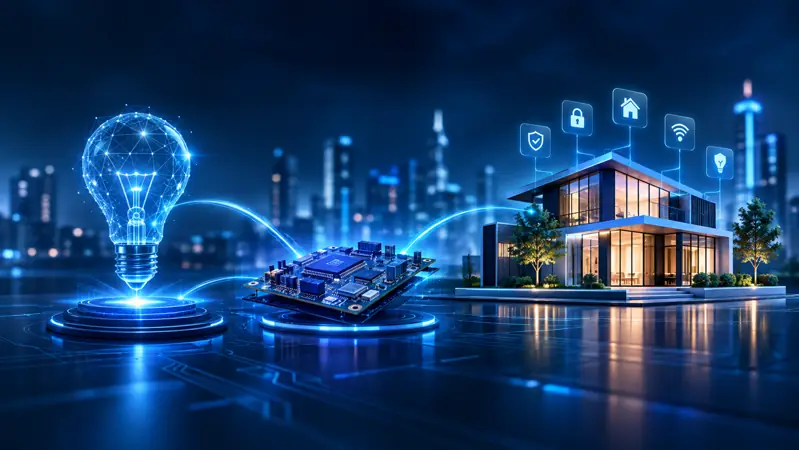
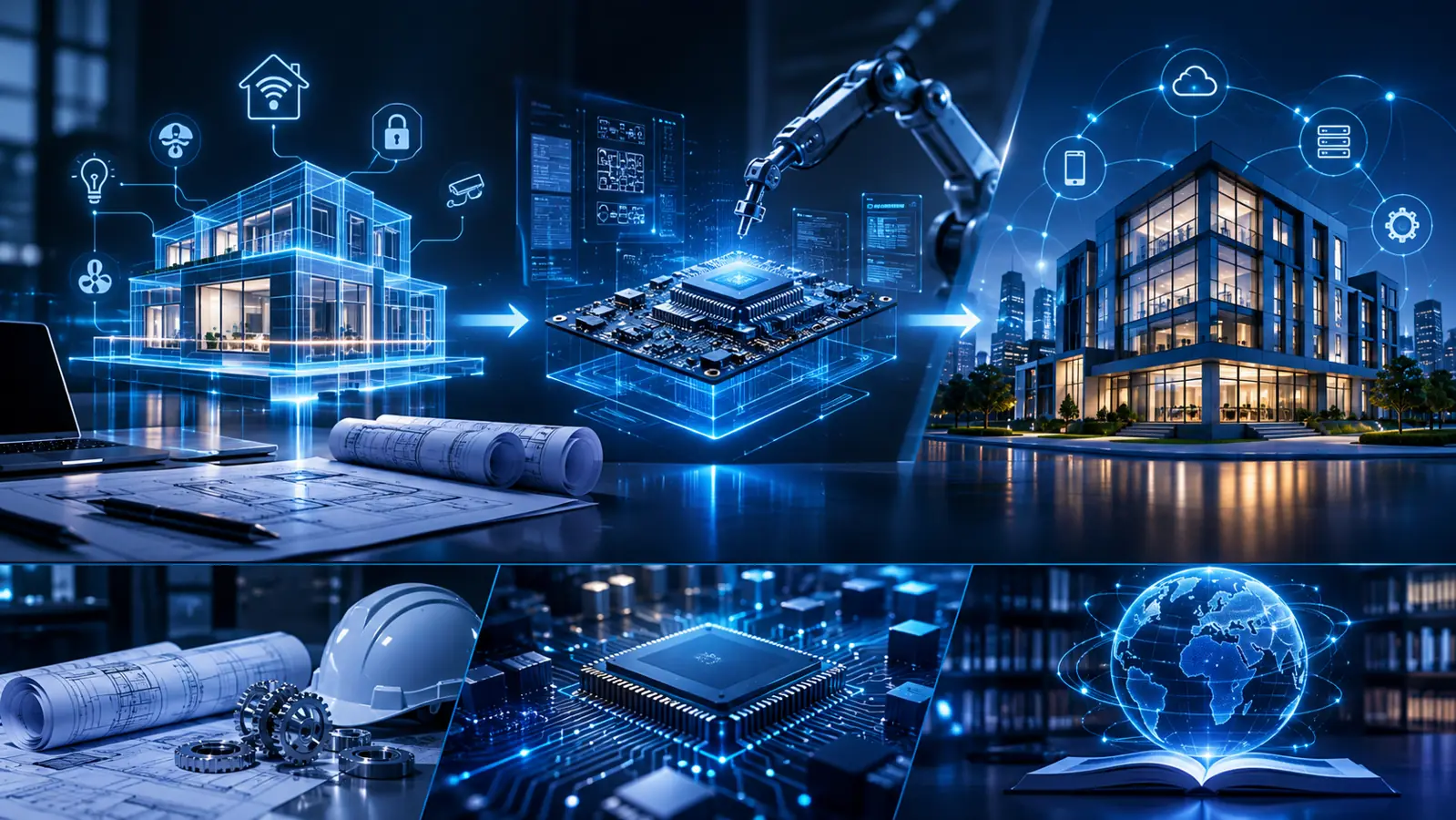
The Internet of Things (IoT) means connecting physical objects equipped with sensors and processors to a network in order to collect data, exchange information and enable remote control. From a home thermostat or smart switch to condition-monitoring sensors on factory machinery, all of these are IoT.
The architecture of an IoT system
Almost every IoT solution has four parts:
- Device and sensor: embedded hardware that measures or controls something, for example a microcontroller-based board.
- Connectivity: sending data over Wi-Fi, Ethernet, Zigbee, LoRaWAN or a cellular network.
- Processing: at the network edge close to the device, or on a server or in the cloud.
- User interface and analytics: dashboards, apps, alerts and reports that support decisions.
Key protocols in IoT
- MQTT: a lightweight publish/subscribe protocol suited to low-power devices and unreliable networks.
- HTTP/REST: simple and widespread for talking to services and APIs.
- Modbus: an old and very common protocol in industrial equipment such as PLCs, drives and energy meters.
- LoRaWAN: long-range, low-power wireless communication for sensors that send small amounts of data.
- Zigbee and Bluetooth LE: short-range, low-power links in buildings and wearables.
IoT in buildings
- Smart lighting and curtain control based on presence, time or ambient light.
- Monitoring temperature, humidity and air quality with automatic ventilation adjustment.
- Energy monitoring (electricity, water, gas) and detection of abnormal consumption.
- Security: door and window sensors, smoke and leak detectors, and alert delivery.
IoT in industry
- Condition monitoring of machinery (temperature, vibration, current) for early fault detection.
- Maintenance planned from real data instead of fixed schedules.
- Tracking and monitoring of warehouses, fleets and production processes.
- Reporting and real-time visibility into production line performance.
Main challenges: security and reliability
Every network-connected device is a potential entry point. To reduce risk, use authentication and encrypted communication (such as TLS), secure over-the-air (OTA) firmware updates and network segmentation between devices and the main network. The design must also define how a device behaves when the network drops, so that critical controls do not depend on a permanent connection.
How to start an IoT project
- Define the problem and the success criteria precisely: what do we want to measure or control?
- Determine the data needed, the reporting rate and the installation environment.
- Choose a suitable protocol and hardware and build a first prototype.
- Build in security, updates and monitoring from the start.
- After field testing, scale up gradually.
Ravak Electronic can support you from hardware design to control systems and device connectivity. Read about Ravak solutions or request a consultation.
Frequently asked questions
What is the difference between IoT and Industrial IoT (IIoT)?
IoT is the general idea of connecting objects to a network. IIoT is its use in industrial settings, usually with stricter requirements for reliability, safety and compatibility with industrial equipment such as Modbus devices.
Is the ESP32 suitable for IoT products?
Modules such as the ESP32 are common for prototyping and many lightweight products, but the final choice depends on power budget, communication range, safety requirements and production volume.
Must device data always be stored in the cloud?
No. Depending on the need, data can be processed on a local server or at the edge, with only part of it sent to the cloud.